What To Do When Someone Dies: The 2027 Guide
Who to call first, how to handle the funeral and paperwork, and which money decisions to put off until someone has legal authority over the estate.
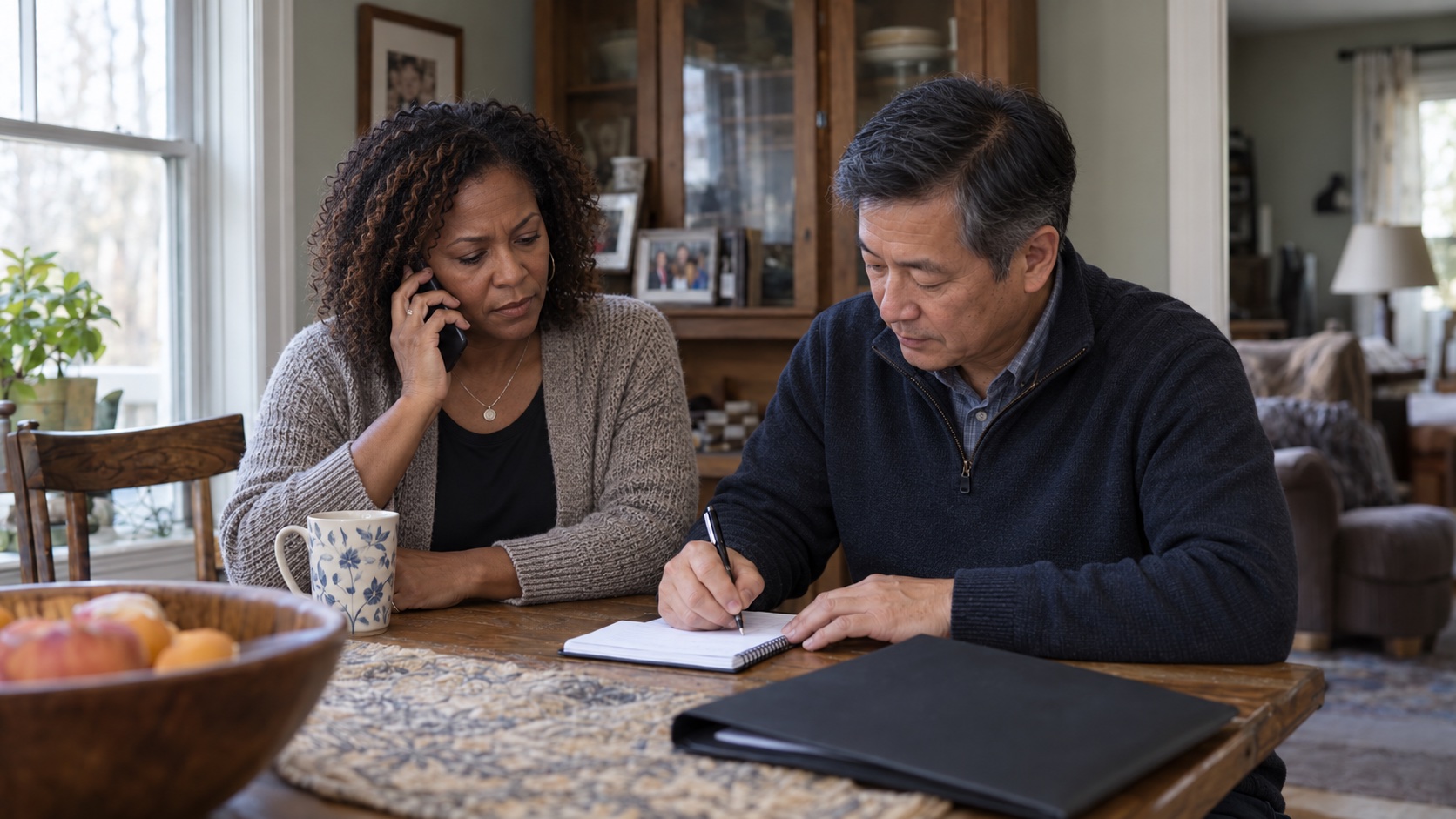
Only a few things have to happen in the first hours. The death needs to be officially confirmed, anyone who depended on the person needs care, and close family should hear the news. Money and property can wait until you know who has the legal right to handle them.
You may be doing this while barely taking in what has happened. If you can, ask someone you trust to sit with you during calls and take notes.
Who to call first
It depends on where the person died and whether the death was expected.
| Situation | What to do |
|---|---|
| In a hospital, nursing home, or other care facility | Tell the staff and ask what happens next. |
| At home, under hospice care | Call the hospice team and follow the plan they gave you. |
| At home, expected, but not under hospice care | Call their doctor or the local medical examiner and ask how to proceed. |
| Sudden or unexpected, or you aren't sure the person has died | Call 911 and follow the dispatcher's instructions. |
Someone in authority, such as a doctor or hospice nurse, officially pronounces the death and fills out the forms for the death certificate. If the person died at home, you don't need to move them right away.
Mention organ donation wishes or religious customs as early as you can, since donation decisions have to be made quickly.
Looking after family, pets, and the home
Make sure any children, dependent adults, or pets the person looked after are cared for. Tell close family privately, then ask one person to spread the news.
If you have a key and the right to be there, lock up the home and photograph valuables before anything is moved. If someone else lives there, remember it's their home too.
Ask the home insurer whether the death or an empty house affects coverage, and keep the utilities on. Save receipts for anything you pay yourself, though the estate may not reimburse all of it.
Before you sign with a funeral home
Look for written funeral wishes, a prepaid plan, or a funeral home the person chose. If relatives disagree about burial or cremation, ask the funeral home who has the legal right to decide under local law.
Funeral homes have to give you prices over the phone if you ask, and an itemized price list when you visit. Under the FTC Funeral Rule, you can choose individual goods and services instead of a package.
Before you sign, check the total and who the contract says will pay it. If you're told something is required, ask whether that's the law or the funeral home's policy. The FTC notes, for example, that no state law requires routine embalming for every death.
Death certificates and the original will
Ask the funeral director about certified copies of the death certificate, or order them from the vital records office in the state where the person died. To decide how many to order, ask each bank, insurer, and agency whether it needs a certified copy and whether it sends it back.
Gather the original will and any later changes to it, trust documents, insurance policies, account statements, deeds, and recent tax returns. Don't unstaple or write on the originals. Ask the probate court whether there's a deadline for filing the will.
Who can act for the estate?
Making the calls doesn't give you the right to withdraw money or sell anything. Even if the will names you as executor, you may need a court to appoint you first.
That happens through probate, the court process for settling an estate. Whether it's needed depends on state law and how the person owned their property. Life insurance and retirement accounts with a named beneficiary, and property in a trust, can pass outside probate.
If you had power of attorney for the person, stop using it. That authority ends at death. In Texas, Estates Code Section 751.131 says so, and TexasLawHelp's guide to handling an estate explains what comes next.
Talk to an estate attorney early if it isn't clear who owns what, relatives disagree about the will, or the debts might be larger than what the person left.
Telling Social Security, employers, and banks
Funeral homes generally report deaths to Social Security. If yours didn't, or there's no funeral home, call 800-772-1213 with the person's name, Social Security number, date of birth, and date of death. Ask whether anyone in the family qualifies for survivor benefits.
Over the next few weeks, contact the person's employer or pension plan, life insurers, banks, and investment firms, and ask what each one needs. Keep a log of every call with the date, who you spoke with, and what happens next.
Hold on to the person's phone and computer, and use each company's process for deceased users instead of signing in as them. Banks may send login codes to the person's phone or email, so check with whoever is handling the estate before canceling either.
What about the person's debts?
Set the bills aside as they arrive. Debts are generally paid from what the person left, not by the family.
There are a few exceptions. Co-signers and joint credit card account holders can be responsible, though an authorized user on a card is not a joint account holder. State law can also make a surviving spouse responsible for some debts, including in community property states such as Texas and California.
Debt collectors can't suggest you have to pay from your own money when you don't. Don't agree to pay just because you're family.
If the estate may not cover all its debts, get advice on which ones come first before paying any. And don't hand out money or belongings yet, even to people named in the will.
Two tax returns to ask about
The first is the person's final income tax return. It's required for the year they died if their income was above the IRS filing requirement, and earlier years they never filed may need returns too.
The second is the estate's own income tax return. As of 2026, the IRS requires one if the estate's assets earn more than $600 in a year, such as interest or rent paid after the death.
A tax professional can tell you which returns apply and when they're due. The IRS explains an estate administrator's tax duties.
Keeping the records together
Legacywyse gives you one place to upload estate documents and keep an inventory of the person's belongings. If you're the one tracking the paperwork, you can create a free account and add what you've gathered before your next appointment.
Review note
Published October 1, 2026. Last reviewed October 1, 2026 against the official sources listed below. Legacywyse Journal articles provide general estate, probate, and personal finance information, not legal or tax advice.