Texas probate · Document guide
Receipt and Release
Record the money or property a beneficiary received from the estate. The receipt provides evidence of the distribution. A release is a separate choice that can give up legal claims, so the beneficiary should understand that language before signing.
Texas Estates Code, Chapter 405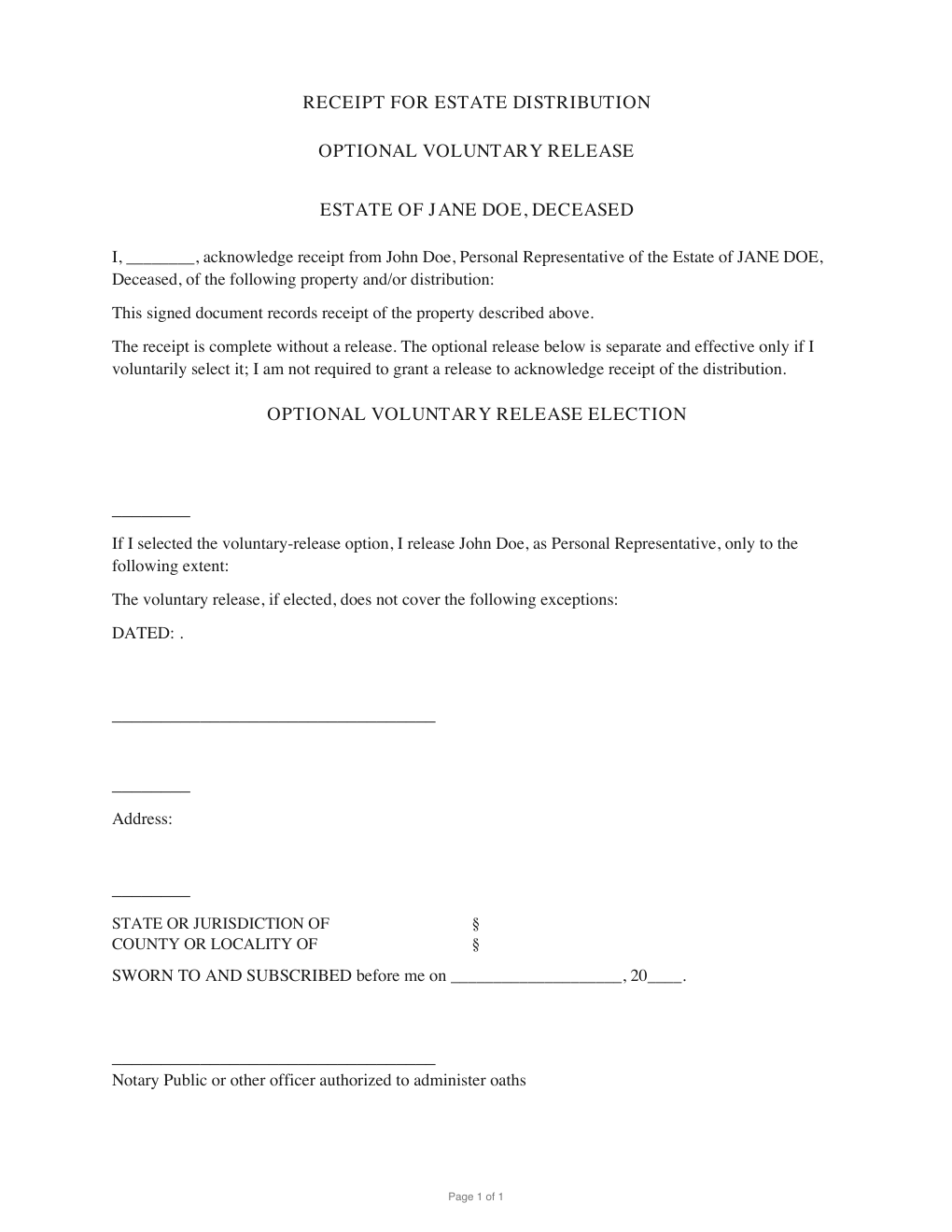
Where it goes
Not filed with the court. It goes to the institution or person who needs it, and a copy stays with the estate records.
Who signs
Beneficiary signs.
Oath or notarization
The people making the sworn statements sign before a notary. Any court approval is separate.
You don't have to start with a blank form.
Legacywyse uses your estate details to prepare the documents specific to your probate path.
Build my free planTell us about the estate
Answer questions about the will, family, assets, and county. Your answers help identify the likely probate path.
Save your plan and open your workspace
Create your free account to keep your checklist and supported document drafts in one place.
Review the draft, then take the next step
Add the remaining details and review your document. Follow the instructions for signatures, notarization, or court review when required. You handle filing.
What to have on hand
Death details
The person's full name, date of death, and last address. A death certificate can help confirm these.
Recipient's details
The beneficiary's full name and address.
What was received
The money or property received, its amount or description, and the date of the distribution.
Get the first three days checklist.
We'll email you a free 6-page guide to the first three days after a loss.
Let's take the next step together.
Answer a few questions about your situation, and we'll help you through what comes next.
Get started for free