How to appraise and sell an estate's art, jewelry, and collectibles
A practical guide to sorting estate valuables, choosing an appraiser, and comparing offers after fees.
At a glance
- Check ownership, the will, and your authority to sell before offering an estate item to a buyer or relative.
- Tell the appraiser why you need a valuation, since insurance replacement value and likely resale value answer different questions.
- Compare what the estate will receive after fees, then keep the appraisal and sale records with the item's inventory entry.
If you're sorting through a relative's home, set aside art, jewelry, and collections for a closer look before including them in a household sale. Photograph each item and keep any paperwork you find with it. You can decide what needs a professional appraisal once you know what you have.
Before approaching buyers, check what you can sell and which pieces need an appraisal.
1. Check what you can sell
Read the will before promising a ring to a relative or accepting an offer for a painting. Check any relevant trust documents, too. An item in the home may belong to a surviving spouse, a trust, or someone who lent it to the person who died.
Your power to sell depends on state law, the estate documents, and the terms of your appointment. Ask the estate's lawyer whether you need to give notice or obtain court approval. If the will leaves a particular item to someone, get advice before selling it.
2. Photograph the items and gather their records
Give each item an inventory number to match it with its photos and paperwork. Note its condition, location, and who has it. Gather these details:
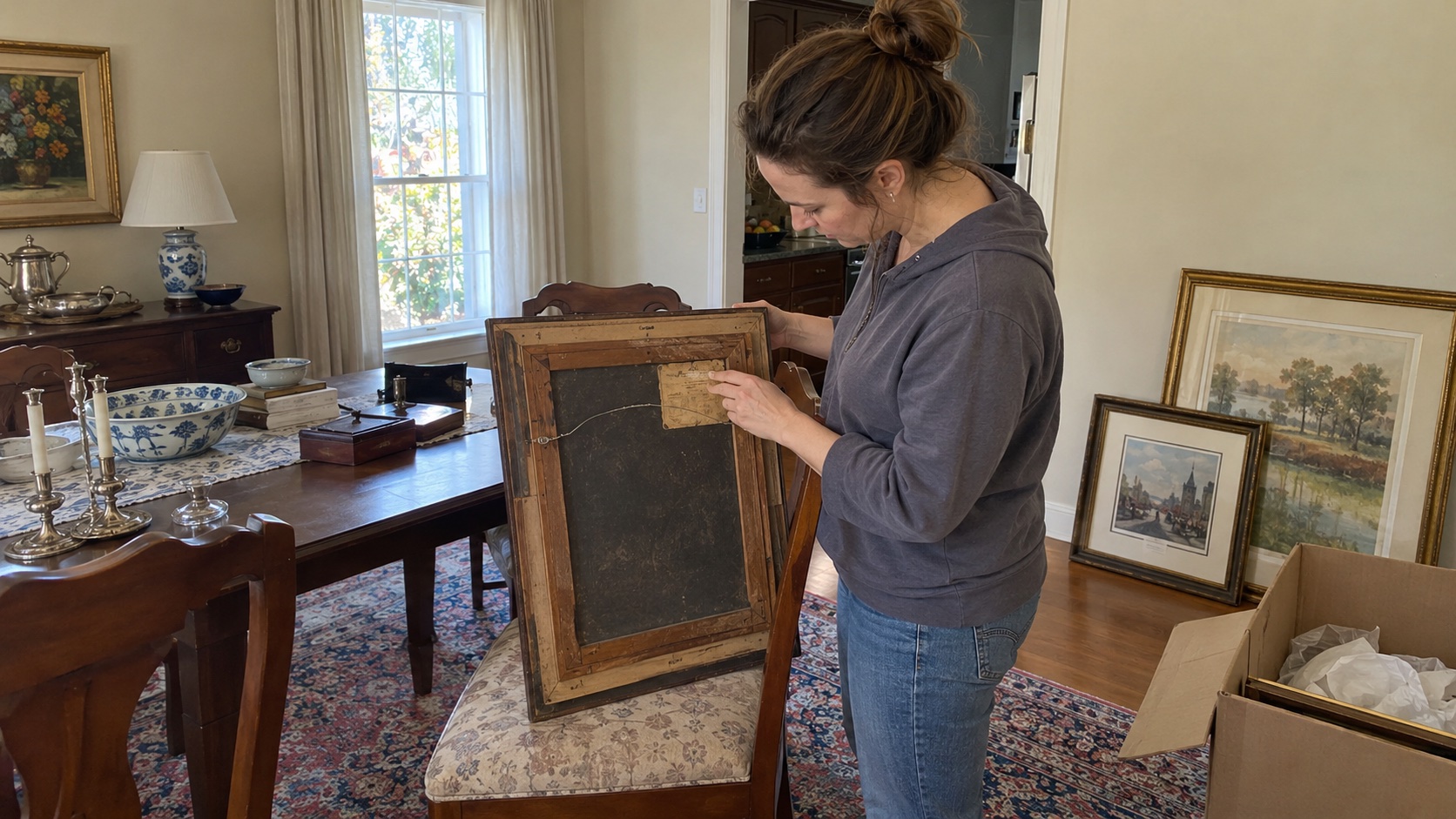
- Art: photographs of the front and back, dimensions, signatures, gallery labels, receipts, and exhibition records.
- Jewelry and watches: photographs of markings and serial numbers, old appraisals, gemstone reports, receipts, and original boxes.
- Collections: catalogs, purchase records, certificates, and notes identifying individual pieces.
Get the first three days checklist.
We'll email you a free 6-page guide to the first three days after a loss.
An object's ownership history is called its provenance. Save supporting records, and mark any unverified family stories as such.
Wait for specialist advice before cleaning or repairing valuables. Even dusting can damage a fragile painting. Check insurance coverage before transporting items or leaving them with an appraiser or seller.
3. Ask for the right kind of appraisal
Tell the appraiser what you need the report for. A probate inventory, tax return, insurance policy, and proposed sale can require different valuations. Your lawyer or tax preparer can confirm the valuation date and report requirements before you pay for the work.
An old insurance appraisal may help identify a piece of jewelry, but its price isn't a resale promise. Jewelers of America explains that fair market value can be lower than the cost of replacing the item in a store.
| Value or estimate | What it tells you |
|---|---|
| Insurance replacement value | The cost of replacing an item under the appraisal's stated assumptions. |
| Fair market value | What a willing buyer and seller would agree to, without pressure to act, in the relevant market. |
| Auction estimate | The range an auction house expects an item might sell for. It is not a guaranteed result. |
A gemstone grading report is different again. It describes the stone's characteristics without assigning a dollar value.
Ask which belongings need individual written appraisals. An initial review can help you decide where a full report is worth the expense. Confirm the court's inventory requirements first.
Choose an appraiser with credentials and recent experience in the kind of property you have. Ask whether confirming who made an item or whether it is genuine requires a separate specialist.
For an independent opinion, hire someone who isn't offering to buy the item. The American Society of Appraisers advises against fees based on a percentage of its value. Get the work to be done, fee basis, and delivery date in writing. Court-appointed appraisers may follow separate statutory fee rules.
4. Choose where to sell
You can use different sellers for different belongings. Consider these options:
- A specialist auction house can assess a piece for a suitable sale. Ask about results for similar items and the proposed auction date.
- A dealer or jeweler may offer to buy outright. Get the offer in writing and compare it with another offer or an independent appraisal.
- A gallery or consignment shop holds the item for sale and pays you under the agreed terms when it sells. Ask how long the agreement lasts and how you can retrieve an unsold item.
- An estate sale or local auction may suit ordinary household contents. Set aside anything needing specialist review before agreeing to sell the contents together.
5. Compare what the estate will receive
Ask for the expected payment after all charges. Check commission, transport, insurance, photography, and storage costs, along with any fees for withdrawing an item or taking it back unsold.
At auction, the reserve is the agreed minimum selling price. Ask what happens if bidding falls short. Confirm when you'll be paid and whether payment depends on the buyer paying first.
Compare those terms alongside the estimate or offer. A higher headline price can leave the estate with less money after costs.
6. Keep the appraisal and sale records
File the appraisal, signed agreement, sale statement, and payment record under the item's inventory number. Record the sale price, each expense, and the amount the estate received. Keep estate proceeds separate from your personal money.
The appraisal may also matter for taxes. Under the general federal rule in Internal Revenue Code section 1014, inherited property's tax basis is its fair market value at the owner's death. Basis is the starting amount used to calculate a taxable gain or loss. Exceptions and alternate valuation rules can apply.
Keep that value separate from the later selling price in your records. Ask the tax preparer who must report the sale, the estate or the beneficiary, and what supporting documents to retain.
Keep your inventory in one place
Legacywyse lets you record estate belongings with photos, descriptions, and notes. Add an entry for each valuable item so you have its details ready when speaking with an appraiser or seller.
Get the first three days checklist.
We'll email you a free 6-page guide to the first three days after a loss.
Sources
8 sources- American Society of AppraisersChoosing and hiring an appraiser
- Jewelers of AmericaJewelry appraisals and types of value
- Sotheby'sHow selling at auction works
- IRSTax basis and sales of inherited property
- Cornell Legal Information InstituteInternal Revenue Code section 1014
- California Courts, Orange CountyProbate administration, appraisals, and sale authority
Published October 23, 2026. Last reviewed October 23, 2026 against the sources above. Legacywyse Journal articles provide general estate, probate, and personal finance information, not legal or tax advice.