Probate in Montgomery County, Texas: Where to File and What to Expect
Montgomery County's only probate court used to be County Court at Law No. 2. Here's how estate cases are filed there, how its Zoom dockets run, and what its small estate checklist asks for.
At a glance
- Probate Court No. 1 is Montgomery County's only statutory probate court. It was County Court at Law No. 2 until October 1, 2023.
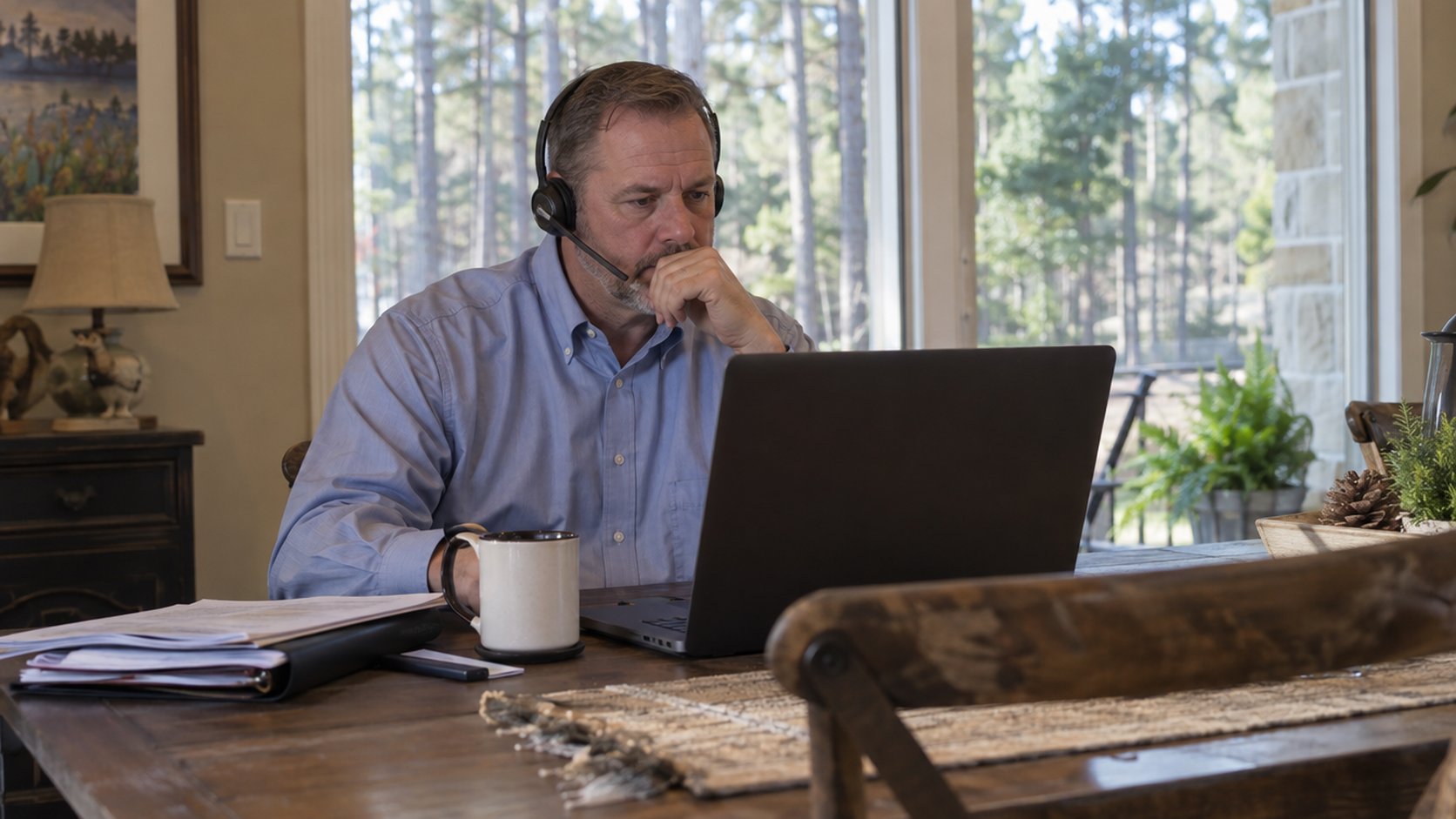
- The court holds regular dockets by Zoom. You need a camera and a headset with a microphone, and exhibits are due by email by 3:00 p.m. the day before.
- Montgomery's small estate checklist requires the court's form, a value for every asset, and two disinterested witnesses. Only a homestead can pass as real estate.
If your parent or spouse lived in Montgomery County, Probate Court No. 1 of Montgomery County will hear the estate case. It's the county's only statutory probate court, a court created to hear estates, guardianships, and mental health cases. Texas Government Code Section 25.1721(b) lists it, and Estates Code Section 32.002(c) gives it original jurisdiction over probate.
The court is fairly new. The county's page says County Court at Law No. 2 converted to a statutory probate court on October 1, 2023, so older papers may still use the old name. Texas Estates Code Section 33.001 puts a will or letters case in the county where the person lived. This guide covers what the court and the County Clerk publish about filing, hearings, lawyers, and small estates.
Filing with the County Clerk
The County Clerk is the clerk of Probate Court No. 1. Its probate page says the court hears all probate, guardianship, and mental health cases, plus related lawsuits. The same page says attorneys must e-file and encourages people without a lawyer to e-file too. Texas Rule of Civil Procedure 21(f)(1) generally doesn't require self-represented filers to e-file.
The court's Rules of Administration, adopted July 15, 2026, say probate cases are filed with the County Clerk and assigned among the county's statutory probate courts in rotation. With one court, every estate goes to Probate Court No. 1, and later lawsuits involving the same estate go to the court where it's pending.
The court splits its staff by case type. Probate coordinators handle administrations and muniments, divided by odd and even case numbers, and a separate coordinator handles heirships and small estate affidavits. Their contact details are on the court's contact page.
Wills often contain Social Security numbers, account numbers, or a child's birth date. The court points to a request form on the County Clerk's site that asks the clerk to redact that information.
Hearings, mostly on Zoom
Probate Court No. 1 runs its regular dockets by Zoom and posts the links on its schedule page. The schedule lists probate dockets on Wednesday and Thursday mornings and an heirship docket on Thursday afternoons. Your hearing notice says whether a hearing is in person or by Zoom. Call the court if it isn't clear, and tell the court beforehand if you want to appear in the courtroom. Trials are in person unless the court gives written permission.
The court's standing order on remote hearings sets the practical rules:
- You need a computer with internet access, a camera, and a headset with a microphone. If you can only join by phone, arrange it with the court coordinator the day before.
- Email any exhibits as PDFs to the other parties and the court reporter by 3:00 p.m. the day before, with the full cause number in the subject line.
- Dress for court, stay muted until your case is called, and don't join while driving.
- No one else in the room may take part unless called as a witness, and that includes helping a witness answer.
- If a hearing was set in person, you need the court's permission to appear remotely.
Get the first three days checklist.
We'll email you a free 6-page guide to the first three days after a loss.
If you only want to watch, the court streams its Zoom dockets on YouTube, and anyone may attend in the courtroom.
What the court expects at a probate hearing
The court's probate page lists what it expects in routine cases:
- Every needed filing must be complete at least two days before the uncontested docket, or the case comes off it.
- Bring someone who knows the family history and can testify. An attorney can't testify unless they know the family personally.
- Don't e-file the proof of death or the oath until after the hearing.
- In an heirship case, the applicant appears with two disinterested witnesses, and every heir either signs a waiver or is served citation through the County Clerk.
For a muniment of title, Medicaid matters. If the person received Medicaid benefits on or after March 1, 2005, the state's Medicaid Estate Recovery Program may have a claim, and a certificate on the status of that claim must come with the application. If they didn't, the court asks that the application, the proof of death, and the order include this sentence: "The Decedent did not apply for and receive Medicaid benefits on or after March 1, 2005."
Our guide to Texas Medicaid estate recovery explains how those claims work.
Do you need a lawyer?
Montgomery's probate court hasn't published a blanket rule like the written pro se policies some other Texas counties post. Its Rules of Administration apply to people without a lawyer the same as to attorneys, and they must give the court a current address, phone number, and email.
The court's small estate checklist says an applicant for a determination of heirship must be represented by an attorney. Its probate page has a section called "Representing Yourself" that lists court decisions without summarizing them. If you plan to apply for letters on your own, ask the probate coordinator first.
Small estate affidavits in Montgomery County
A small estate affidavit lets the heirs of someone who died without a will collect property worth $75,000 or less, not counting the homestead and exempt property, without opening an administration. Texas Estates Code Chapter 205 sets the rules. Probate Court No. 1's checklist adds what Montgomery looks for:
- Use the most recent form on the court's website. The Rules of Administration require the court's own form.
- Wait at least 30 days after the death, long enough to know about all the bills.
- Give every asset a value. The court can't approve an affidavit with an asset of unknown value.
- List every debt, including any attorney's fees for preparing the affidavit.
- Show each heir's share of every type of property. The court links descent and distribution charts to help.
- Have every heir with legal capacity sign before a notary, along with two disinterested witnesses who have no interest in the estate and aren't related to the person who died.
- If an heir is a minor, the court won't approve the affidavit unless the minor's share can go into the court's registry until they turn 18.
The only real estate an affidavit can transfer is the homestead. The affidavit has to include the facts that make it a homestead, plus its legal description and street address. If an heir can't be found, or an heir has since died with no personal representative, the family needs an application to determine heirship instead.
The court usually decides without a hearing and will contact you if it needs one. The checklist warns that many affidavits are denied for problems that can't be fixed, and denied applicants lose their filing fees.
Our Texas small estate affidavit form guide explains who signs and what the affidavit must list. In Montgomery, copy those facts onto the court's form before anyone signs.
The statewide paths, briefly
Montgomery's courts apply the same Texas Estates Code as every other county. Which path fits depends mostly on whether there was a will and what the estate owes.
With no will and a small estate, heirs can use the small estate affidavit.
With a will and no unpaid debts except real-estate liens, a muniment of title application can transfer property without appointing an executor.
With no will and an estate that needs a court-appointed administrator, the path is an application for letters of administration.
When the family mainly needs to show who inherited real estate, an affidavit of heirship is recorded in the county deed records rather than filed with a court.
Our Texas probate overview walks through how to choose among them.
Common questions
Does Montgomery County have a probate court?
Yes. Probate Court No. 1 of Montgomery County is the county's only statutory probate court, listed in Texas Government Code Section 25.1721(b). It was County Court at Law No. 2 until October 1, 2023. The County Clerk serves as its clerk.
Are Montgomery County probate hearings on Zoom?
Many are. Probate Court No. 1 posts Zoom links for its regular dockets on its schedule page, including probate dockets on Wednesday and Thursday mornings. Your hearing notice says whether a hearing is in person or by Zoom. Trials are in person unless the court gives written permission.
What does Montgomery County require for a small estate affidavit?
Probate Court No. 1's checklist requires the court's own form, a wait of at least 30 days, a value for every asset, every debt listed, and sworn signatures from every heir and two disinterested witnesses. Only a homestead can pass as real estate. The court usually decides without a hearing.
How Legacywyse can help
Legacywyse asks about the family, the will, and the assets, then drafts the Texas forms your path calls for. For a Montgomery small estate affidavit, copy the draft's facts onto Probate Court No. 1's form and check it against the court's checklist. You handle filing.
Get the first three days checklist.
We'll email you a free 6-page guide to the first three days after a loss.
Sources
6 sources- Montgomery County Probate Court No. 1Probate
- Montgomery County Probate Court No. 1Schedule and Zoom dockets
- Montgomery County Probate Court No. 1Small estate affidavits
- Montgomery County Probate Court No. 1Procedures and local rules
- Montgomery County ClerkProbate
- Texas Government CodeChapter 25, Statutory county courts
Published November 4, 2026. Last reviewed November 4, 2026 against the sources above. Legacywyse Journal articles provide general estate, probate, and personal finance information, not legal or tax advice.