Opening a Safe Deposit Box After a Death in Texas
Texas law lets a bank allow close family to look inside a safe deposit box for a will, a burial deed, or a life insurance policy. Everything else stays in the box until someone has legal authority.
At a glance
- A Texas bank may let the spouse, a parent, an adult descendant, or the executor named in a copy of the will look inside the box.
- Without a court order, only three things can leave the box: a will, a burial plot deed or burial instructions, and a life insurance policy.
- If the bank won't allow it, the probate court can order a supervised examination. The rest of the contents wait for Letters or other legal authority.
Many people keep their will in a safe deposit box, and the box is in their name alone. After the death, the family needs the will to start probate, and the bank won't hand over a box to someone who doesn't yet have legal authority.
Texas Estates Code Chapter 151 handles this. It allows a limited look inside the box for three specific documents, before anyone has gone to court. The rest of the contents stay put until someone has authority to collect them.
Who can look without a court order
Under Section 151.003, the bank may let these people examine the box:
- The person's spouse.
- A parent of the person who died.
- A child, grandchild, or other descendant who is at least 18.
- Someone named as executor in a copy of a document that appears to be the person's will.
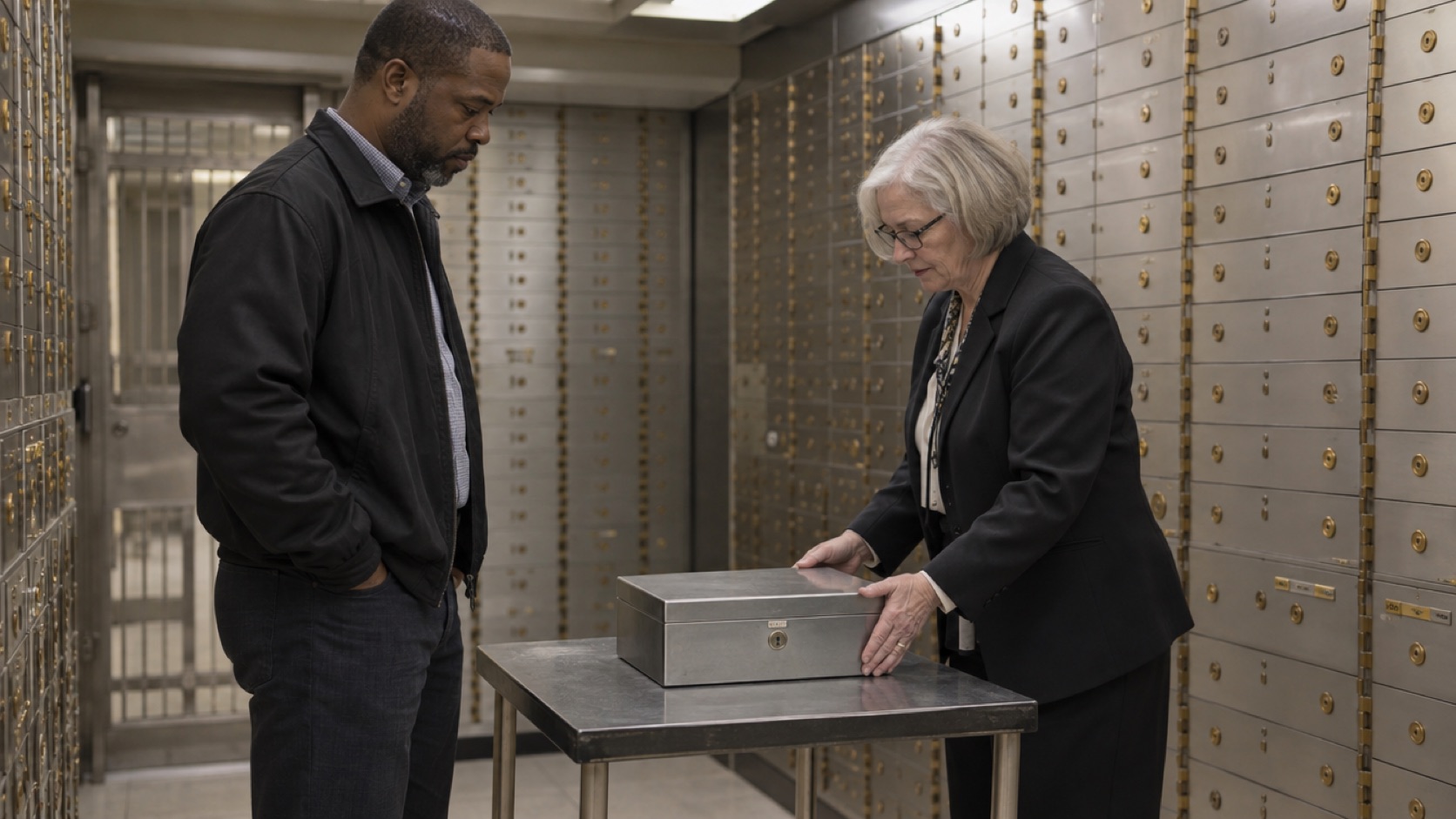
The word in the statute is "may." The bank is allowed to permit the examination but isn't required to. If it agrees, the examination happens in the presence of the bank or one of its officers. Call the branch first and ask whether it allows this kind of examination and what it needs to see from you.
What you're allowed to take
Section 151.004 lets the bank hand over three kinds of documents, and only if you ask for them and sign a receipt:
- A document that appears to be the will. It goes to the probate court clerk in the county where the person lived, or to the executor named in it.
- A deed to a burial plot, or a document that appears to give burial instructions. It goes to the person doing the examination.
- A life insurance policy on the person's life. It goes to a beneficiary named in the policy.
Get the first three days checklist.
We'll email you a free 6-page guide to the first three days after a loss.
If the bank releases a will, it keeps a copy until the fourth anniversary of the delivery. Section 151.005 says nobody may remove anything else from the box except under these sections or another law. Cash, jewelry, coins, savings bonds, and property deeds stay inside.
When the bank says no
If the bank won't allow an examination, or no one on the list above is available, ask the probate court. Under Section 151.001, a judge can order the bank to let a court representative examine the box. You have to show that the bank leased the box to the person who died and that it may contain a will, a burial plot deed, or a life insurance policy.
The examination takes place in front of the judge or the judge's agent and someone from the bank. Under Section 151.002, the judge can also order the representative to take the document. A will goes to the clerk of a probate court in the same county, and the clerk gives a receipt for it. A burial plot deed goes to the person the judge names. An insurance policy goes to its beneficiary.
Our guide to the Texas safe deposit box application form shows what the request includes and who signs it.
Getting the rest of the contents
Once the court appoints an executor or administrator and the clerk issues Letters, the executor has documented authority over the estate's property. Under Section 306.007, Letters issued under the court's seal are sufficient evidence of the appointment. Our guide to Letters Testamentary in Texas explains how to get them.
With Letters, contact the bank again to open the box and inventory what's inside. Anything that belonged to the person goes on the estate inventory. If the family is using a path without Letters, such as a small estate affidavit, ask the bank which documents it accepts before you go.
Common questions
Does a Texas bank have to open a safe deposit box for the family?
No. Texas Estates Code Section 151.003 says the bank may permit an examination by the spouse, a parent, an adult descendant, or the executor named in a copy of the will. If the bank refuses, the family can ask the probate court to order an examination under Section 151.001.
Can I take cash or jewelry out of the box before probate?
No. Section 151.005 bars removing the contents except as Chapter 151 or another law allows. Without a court order, Chapter 151 covers only a will, a burial plot deed or burial instructions, and a life insurance policy.
Where does the will go if it's found in the box?
Without a court order, the bank can deliver it to the probate court clerk in the county where the person lived or to the executor named in it, in exchange for a receipt. The bank keeps a copy for four years. Under a court order, it goes to the probate clerk in the same county as the judge.
Who can be present when the box is opened?
In an examination without a court order, the bank or one of its officers must be present. In a court-ordered examination, the judge or the judge's agent and someone from the bank must be present.
How Legacywyse can help
If you tell Legacywyse the person had a safe deposit box, your plan adds a step for it and drafts the request for a court-ordered examination from your answers. Use it if the bank won't allow an examination on its own. You sign it before a notary and file it with the probate court.
Get the first three days checklist.
We'll email you a free 6-page guide to the first three days after a loss.
Sources
2 sources- Texas Estates CodeChapter 151, Examination of documents and safe deposit boxes
- Texas Estates CodeChapter 306, Granting and issuance of letters
Published November 4, 2026. Last reviewed November 4, 2026 against the sources above. Legacywyse Journal articles provide general estate, probate, and personal finance information, not legal or tax advice.